Moving to Beaufort often starts with one big question: should you buy in Burton or rent first? If you are balancing a job change, a military move, a new commute, or a tight timeline, that choice can feel bigger than just comparing monthly payments. The good news is that Burton gives you real options, and the best path usually comes down to how long you plan to stay, how much flexibility you need, and what you want your move to look like in the first year. Let’s dive in.
Burton offers a practical middle ground
Burton is a census-designated place in Beaufort County with 6,777 residents and 2,874 households, based on the 2020 Census. American Community Survey estimates for 2020 through 2024 show a 60.2% owner-occupied housing rate, a median gross rent of $1,229, and median monthly owner costs with a mortgage of $1,299.
Those numbers matter if you are relocating because they suggest Burton is not a place where buying and renting sit worlds apart each month. On paper, the gap looks fairly narrow. In real life, your decision often depends more on your timeline, your upfront cash, and how much flexibility you want after the move.
Buying in Burton can stretch further
If you are comparing Burton to the broader Beaufort County market, Burton stands out on price. In May 2026, Burton’s median sale price was $329,803, while Beaufort County’s broader median sale price was $608,176.
That means Burton’s median sale price was about 54% of the county median, or roughly $278,373 lower. For many relocating buyers, that difference can make homeownership feel more reachable. It can also open the door to more space or a different home style than you might expect elsewhere in the county.
What homes look like in Burton
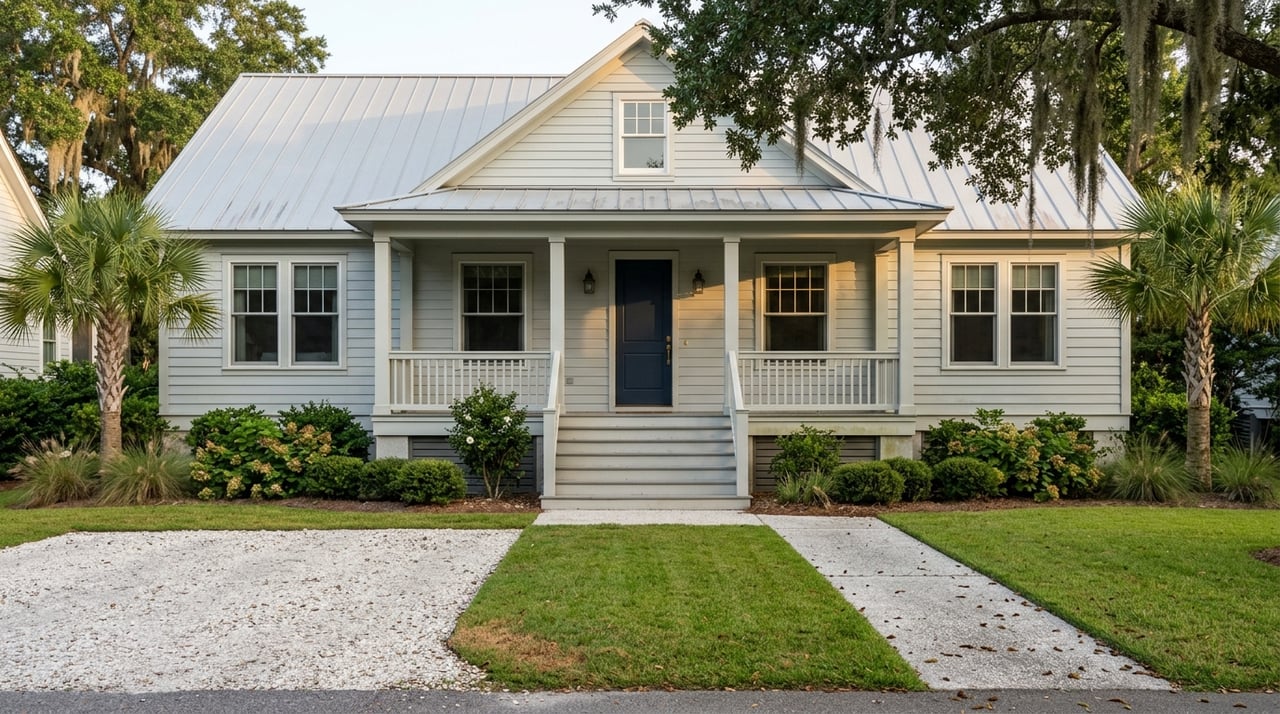
Recent Burton-area sales showed a market made up largely of detached single-family homes. Sale examples included 3-bedroom homes around $322,000, 3-bedroom and 2-bath homes around $350,000, and 3-bedroom to 4-bedroom homes in the low $400,000s.
That local pattern can be helpful if you want a more traditional single-family setup. Burton may offer a more affordable path into that kind of home than some nearby parts of Beaufort County. Homes were also averaging 61 days on market in May 2026, which suggests you may have some room to evaluate options carefully.
Renting in Burton gives you flexibility
If your move is happening fast, renting can give you breathing room. In late June 2026, a Burton rental search showed 43 apartment listings and 5 house listings.
Example apartment rents included about $1,394 for a 1-bedroom, $1,495 for a 2-bedroom, and roughly $1,562 to $1,874 depending on unit size and community. Nearby apartment communities in the same search snapshot ranged from about $1,352 to $2,245.
House rentals in the same snapshot ranged from a $950 room rental to larger single-family homes at roughly $2,300 to $3,200 per month. That points to a rental market with both apartment-style living and larger-home options, but with fairly modest supply. In practice, some renters may also end up looking at nearby Beaufort and Port Royal addresses to widen their choices.
Use county rent benchmarks carefully
For planning purposes, Beaufort County’s fiscal year 2026 fair market rent table lists $1,657 for a 1-bedroom, $1,816 for a 2-bedroom, $2,177 for a 3-bedroom, and $2,720 for a 4-bedroom unit. These figures are useful as a budget benchmark, not a promise of what any specific rental will cost.
That matters when you are building a relocation budget. Asking rent can vary by unit size, condition, location, and available inventory at the time you move. A benchmark helps, but the current listing mix usually tells you more about what is actually available right now.
The monthly payment comparison is only part of it
At first glance, Burton’s median gross rent of $1,229 and median monthly owner costs with a mortgage of $1,299 may look close enough to make buying the obvious choice. But that comparison does not tell the full story of owning a home.
Buying involves more than the sale price and mortgage payment. Ownership costs can include closing costs, property taxes, homeowners insurance, maintenance, and in some cases private mortgage insurance if your down payment is below 20%.
If a property is in a FEMA Special Flood Hazard Area, flood insurance is typically required. In a coastal market like Beaufort County, that is a cost you do not want to overlook. It can widen the true monthly and annual gap between renting and buying.
When renting makes more sense
Renting is often the better fit when your stay in Beaufort is uncertain. It can also make sense when you want lower upfront costs or when you prefer time to learn the area before choosing a neighborhood and home style.
You may want to rent first if:
- You are relocating on a short deadline
- Your job or military orders could change
- You want to keep your upfront cash available
- You are still learning commute patterns and daily routines
- You want flexibility before committing to ownership costs
For many newcomers, renting first is not a delay. It is a strategy that gives you time to make a more confident purchase later.
When buying makes more sense
Buying can be the stronger move when you expect to stay long enough to make the upfront costs worthwhile. It may also fit if you have the cash and credit to handle the full cost of ownership and want to build equity in a market where prices are well below the broader county median.
You may want to buy if:
- You expect a longer stay in Beaufort
- You want a single-family home and more control over your space
- You are prepared for closing costs and ongoing ownership expenses
- You want to build equity over time
- You have a clear sense of your commute and location priorities
In Burton, that equation can be appealing because the local for-sale market sits well below the countywide median price. That does not make buying automatically cheaper, but it can make ownership more attainable.
Commute planning should shape your choice
Housing is only part of a successful relocation. Your day-to-day travel matters too. Burton workers report a mean travel time to work of 25.7 minutes.
If you are deciding between renting closer in or buying farther out, that commute can affect your budget, schedule, and quality of life. Transportation resources in the region include CARTA, TriCounty Link, and Lowcountry Go, which supports carpools, vanpools, public transit, walking, biking, and emergency ride home services.
Transportation options can add flexibility
Lowcountry Go’s vanpool program is designed for groups of four or more and is most economical for commutes of 15 or more miles one way. It also offers Emergency Ride Home reimbursement of up to $55 per use, up to three times per calendar year, for registered commuters.
For some households, that kind of support can make a longer commute more manageable. For others, it may reinforce the value of renting first until work routines are fully settled. Either way, commute planning should be part of your buy-versus-rent decision from the start.
Military moves need a different lens
Burton can be especially relevant for military households relocating to the Beaufort area. MCAS Beaufort’s mission includes support for 2nd Marine Aircraft Wing, attached II MEF units, and MCRD Parris Island and the Eastern Recruiting Region.
Broad River Elementary, a nearby Beaufort County school, states that more than one-third of its students are military families based at MCAS Beaufort, Parris Island, or the Beaufort Naval Hospital. That is a useful sign that military relocation is a familiar part of the broader local area.
If your assignment length is uncertain, renting may provide the flexibility you need. If your stay is expected to last long enough, buying may offer more stability and a chance to put down roots during your time in Beaufort.
A smart Burton decision starts with your timeline
If you are relocating to Burton, the choice is rarely just buy good, rent bad, or the other way around. Burton’s numbers suggest a market where monthly rent and owner payments can look surprisingly close, but the real decision turns on ownership costs, available inventory, your expected length of stay, and how much certainty you have today.
A short or uncertain stay usually points toward renting. A longer stay, strong financial readiness, and a desire to build equity may point toward buying. The right answer is the one that fits your move, your budget, and your next chapter in Beaufort.
If you want local guidance as you weigh Burton against nearby Beaufort-area options, the Chambers Helms Group can help you compare neighborhoods, price points, and timing with the kind of insight that only comes from deep Beaufort roots.
FAQs
Should you buy or rent in Burton when relocating to Beaufort?
- Rent often makes more sense if your stay is uncertain or you want flexibility, while buying may be the better fit if you expect a longer stay and are ready for the full costs of ownership.
How much does it cost to buy a home in Burton, SC?
- Burton’s median sale price was $329,803 in May 2026, with recent sale examples showing many detached single-family homes in the low $300,000s to low $400,000s.
How much does it cost to rent in Burton, SC?
- In a late June 2026 rental snapshot, apartment listings ranged from about $1,394 for a 1-bedroom to more than $2,200 in some nearby communities, while house rentals ranged from a $950 room rental to roughly $2,300 to $3,200 for larger homes.
Is Burton more affordable than Beaufort County overall?
- Based on May 2026 data, Burton’s median sale price was substantially lower than the broader Beaufort County median, making it a more affordable ownership option than many areas in the county.
What ownership costs should you budget for in Burton?
- In addition to your mortgage payment, you should plan for closing costs, property taxes, homeowners insurance, maintenance, possible private mortgage insurance, and possible flood insurance depending on the property.
What is the average commute from Burton, SC?
- Burton workers reported a mean travel time to work of 25.7 minutes, which makes commute planning an important part of deciding whether to rent first or buy right away.