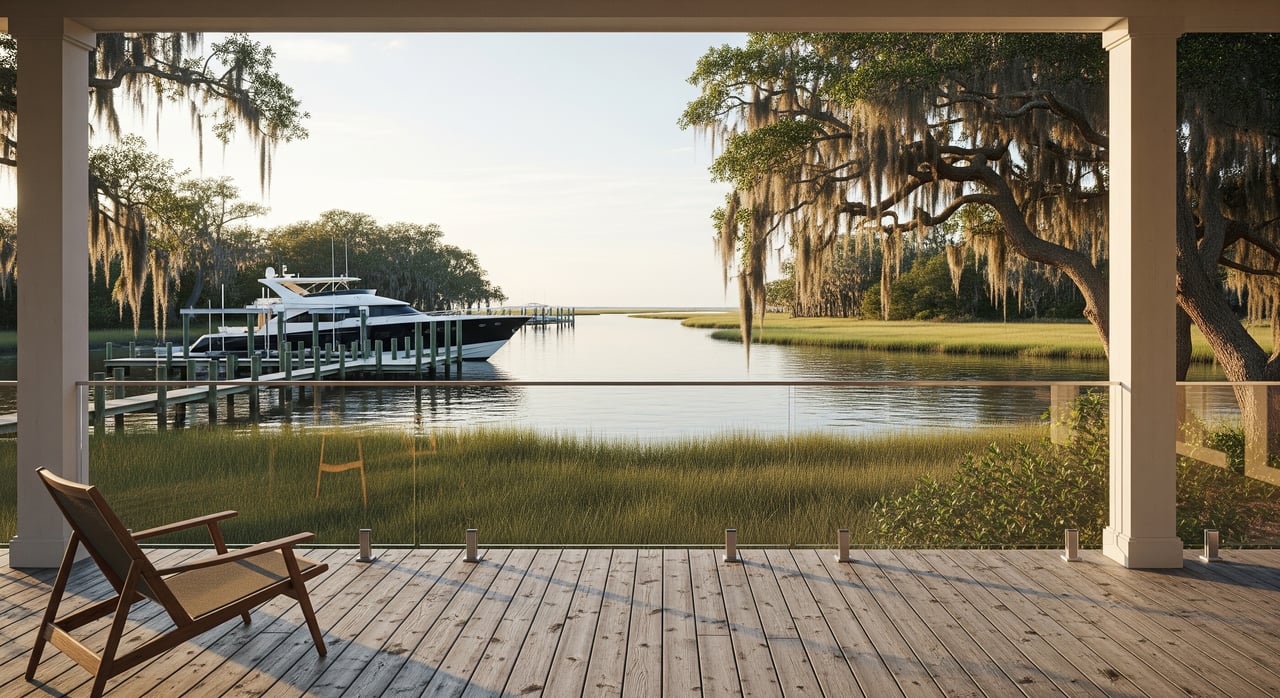
Dreaming of a Beaufort home where your backyard meets the water, but not sure if deep water or a tidal creek fits your life? You are not alone. In our Lowcountry, the difference shapes everything from your boating routine to your maintenance budget. In this guide, you will learn what each option means in Beaufort, how tides and permits factor in, what risks to consider, and how to choose with confidence. Let’s dive in.
What “deep water” means in Beaufort
In Beaufort, deep-water property typically fronts a major waterway with relatively unobstructed access to a maintained channel. Think the Beaufort River, Port Royal Sound, Broad River, or similar stretches where boats with moderate to larger drafts can move at most tide stages. You can expect easier, more predictable access to open water, marinas, and fuel, along with more flexibility for larger boats and sailboats.
The semi-diurnal tides in our area still matter, but deep water reduces how tightly you have to time departures. If you own a larger center console or sailboat, this access can be a major selling point and a reason deep water often carries a price premium.
What “tidal creek” means in Beaufort
Tidal-creek property fronts smaller creeks, inlets, and marsh channels. Around Lady’s Island and the nearby Sea Islands, you will find countless meandering creeks with big personality and stunning marsh views. Depths change more with the tide, and some creeks are passable only at mid to high tide for boats with limited draft.
Tidal creeks suit smaller powerboats, flats skiffs, kayaks, and paddleboards. For many buyers, the appeal is the quiet, wildlife-rich setting. You trade some all-tide boating convenience for privacy, scenery, and a front-row seat to Beaufort’s salt-marsh life.
Boating and access differences
Deep-water access
- Supports larger powerboats and sailboats.
- Easier year-round navigation with fewer tide constraints.
- More direct routes to the Beaufort River, Port Royal Sound, and nearby channels.
- Dock designs can include floating docks and deeper slips, which simplify boarding and storage.
Tidal-creek access
- Best for shallow-draft boats, kayaks, and paddlecraft.
- Requires timing around low tides in some creeks.
- Dock structures may be shorter or more specialized, and some areas see seasonal access limits.
- Expect to check local tide predictions before longer outings.
Shoreline, maintenance, and lifestyle
Shoreline exposure and upkeep
- Deep water often faces more wind and wave energy. You may need more robust construction such as bulkheads, riprap, or higher pilings. That can mean higher initial and ongoing costs.
- Tidal-creek shorelines are often marsh-front. The marsh can buffer wave energy, but creek banks can still erode and silt can accumulate. Maintenance focuses on erosion control and keeping access functional.
- Living shorelines, including marsh plantings and oyster structures, are increasingly recommended or required in parts of the Lowcountry to protect habitat and reduce erosion while preserving natural function.
Habitat and day-to-day feel
- Tidal creeks are incredibly productive ecologically. Expect birds, crabs, and juvenile fish activity, with excellent kayaking, paddleboarding, and quiet fishing.
- Deep-water settings make it easier to reach offshore and nearshore fishing, plus quick trips to marinas for fuel and services. If your routine includes long boat days, deep water often wins for convenience.
Dock and mooring design
- Deep water supports floating dock systems and deeper slips that work across a broader tidal range.
- Shallow creeks may need tailored dock designs and careful siting. A short pier may suffice in some areas, while other sites require specific pilings and thoughtful placement to maintain access.
Permits and environmental rules
When you plan any work in coastal waters, several agencies can be involved:
- U.S. Army Corps of Engineers oversees federal permits for work in navigable waters and for dredge or fill.
- South Carolina DHEC Office of Ocean and Coastal Resource Management manages state coastal zone approvals for docks, seawalls, and marsh impacts.
- Beaufort County and the City of Beaufort apply local zoning, setbacks, and building permits.
Dredging to deepen access is tightly regulated and often restricted in tidal creeks because of habitat impacts and sediment movement. Even for simple dock work, expect to verify permits and follow detailed guidelines. If a property already has a dock or bulkhead, ask for as-built drawings, permits, and maintenance records during due diligence.
Another key detail is the mean high water line. Construction seaward of mean high water, or within protected wetlands, triggers additional scrutiny and may require mitigation. Confirm the surveyed boundary, the mean high water line, and any easements when you evaluate a property.
Flood, storms, and sea-level rise
Waterfront parcels in Beaufort commonly sit in FEMA Special Flood Hazard Areas. If so, lenders will require flood insurance under the National Flood Insurance Program. Elevation, construction type, and flood zone all influence premiums, so obtain quotes early.
Storm surge from tropical systems is a real risk, especially along rivers and sounds that carry surge inland. Waterfront homes can face wave action and post-storm sediment changes. Over the long term, sea-level rise may influence shoreline position, marsh migration, and the frequency of nuisance flooding. Using current flood maps, elevation certificates, and local coastal planning tools is an important part of your decision-making.
Costs to plan for
Purchase price and resale
Waterfront is generally priced above comparable inland homes. Within waterfront options, deep water often commands a premium because of broader boating utility and perceived permanence of access. Tidal-creek and marsh-front properties attract buyers who value privacy, views, and wildlife, though the potential buyer pool may be narrower if large-boat access is limited.
Ongoing ownership costs
- Dock and shoreline: Deep-water exposure can drive higher build standards and maintenance for docks and protective structures. Tidal creeks may require targeted erosion control and periodic upkeep.
- Flood insurance: If the home sits in a high-risk zone, lenders typically require flood coverage. Premiums vary by elevation and design, so get quotes before you commit.
- Permit and repair expenses: Marine construction, storm repairs, and any mitigation work add to long-term costs. Budget for proactive maintenance in your affordability planning.
Financing and title
Lenders often apply additional scrutiny to waterfront properties. Expect to provide flood documentation and resolve any questions about riparian rights, easements, or historic fill before closing. A current survey, title review, and elevation certificate help streamline underwriting.
Which waterfront fits your lifestyle?
- You own a larger boat or sailboat: Deep water usually fits best for reliable access at a wider range of tides and easier routes to the Beaufort River and Port Royal Sound.
- You love quiet creeks and paddle days: A tidal creek can be perfect if you prefer small boats, kayaks, and wildlife watching over big-boat convenience.
- You prioritize privacy and marsh views: Tidal-creek frontage offers a serene, natural setting that many buyers value highly.
- You want ease and flexibility: Deep water often reduces tide timing and supports more dock options, but it can come with higher build and maintenance standards.
There is no single right answer. It comes down to how you live on the water, your budget for maintenance and insurance, and the specific site conditions of each property.
Due-diligence checklist for any Beaufort waterfront
- Confirm access and depth
- Review nautical charted depths and local tide tables for the site.
- Ask local marinas or harbormasters about channel maintenance and recent dredging.
- Survey and title
- Order a current boundary and flood-elevation survey that shows the mean high water line, easements, and encroachments.
- Review the deed for riparian rights and any HOA rules that govern docks or shoreline work.
- Permits and past work
- Verify permits for existing docks, bulkheads, or shoreline stabilization, and request as-built drawings and maintenance history.
- Check for any code violations or unpermitted structures.
- Flood and storm exposure
- Review current FEMA flood maps and obtain elevation certificates for existing structures.
- Ask about past storm surge or tidal flooding on the parcel.
- Soils, septic, and utilities
- If the home uses septic, request permitting history, location, and condition. Confirm soil suitability and water table.
- Confirm the availability and location of public sewer and water lines.
- Environmental constraints
- Determine whether wetlands or submerged lands are present and whether shoreline stabilization or dredging is restricted.
- Insurance and cost planning
- Get flood and homeowners insurance estimates.
- Obtain cost estimates for dock or bulkhead maintenance and any marine-structure insurance.
- Agency coordination
- Contact the City of Beaufort or Beaufort County planning offices, SC DHEC OCRM, and the U.S. Army Corps of Engineers to confirm permit pathways for your plans.
Work with a local guide
Choosing between deep water and a tidal creek is as much about lifestyle as it is about logistics. With the right plan, you can enjoy Beaufort’s rivers, sounds, and marshes with confidence. If you want a partner who understands the tides, channels, and paperwork that come with waterfront living, our team is here to help. Reach out to the Chambers Helms Group to talk through your goals and explore the best-fit properties on and off the market.
FAQs
What is the difference between deep water and a tidal creek in Beaufort?
- Deep water offers access to maintained channels for larger boats across more of the tide cycle, while tidal creeks are shallower, more tide dependent, and best for small boats and paddlecraft.
Will my lender require flood insurance for a Beaufort waterfront home?
- If the property is in a FEMA Special Flood Hazard Area, lenders typically require National Flood Insurance Program coverage. Check current maps and get quotes early.
Can I dredge a tidal creek to improve boat access?
- Dredging is tightly regulated and often restricted in creeks because of habitat impacts. Approvals are required from the U.S. Army Corps of Engineers, SC DHEC OCRM, and local authorities.
How do permits work for docks and shoreline projects in Beaufort?
- Most in-water work needs approvals from federal, state, and local agencies. Verify existing permits, and consult regulators before planning new docks, bulkheads, or living shorelines.
What maintenance should I expect on a deep-water dock?
- Deep-water exposure can mean more wind and wave energy, so you may need robust materials, higher pilings, and regular inspections after storms.
Do tidal-creek properties hold value if I do not own a large boat?
- Many buyers prioritize marsh views, wildlife, and privacy. While the buyer pool may be narrower for limited-boat-access homes, these properties appeal strongly to nature-focused buyers.
How will sea-level rise affect a Beaufort waterfront home over time?
- Rising water levels can influence marsh migration, shoreline position, and nuisance flooding frequency. Plan for long-term adaptation and maintenance as part of ownership.