If you are dreaming about a Beaufort waterfront home, the view is usually the easy part. The day-to-day reality is knowing how to care for a coastal property, plan for storms, and stay ahead of insurance and maintenance questions before they become expensive surprises. Whether you are buying your first waterfront home or comparing options along Beaufort’s waterways, this guide walks you through the practical essentials that matter most. Let’s dive in.
Why Beaufort Waterfront Ownership Needs Planning
Owning on the water in Beaufort comes with a different set of responsibilities than owning farther inland. Coastal conditions like wind-driven rain, airborne salt, corrosion, and decay are ongoing concerns, not occasional ones, according to FEMA’s coastal construction guidance.
That matters because waterfront ownership is not just about the purchase itself. It is also about keeping up with exterior systems, understanding flood exposure, and making smart decisions about repairs, permits, and insurance over time.
Beaufort County also uses FEMA Flood Insurance Rate Maps to regulate development in Special Flood Hazard Areas. If you are considering a waterfront property, flood zone details should be part of your early due diligence, not something you review at the end.
Flood Risk Goes Beyond the Map
A common mistake is assuming a property outside the highest-risk flood zone has little to worry about. The City of Beaufort’s emergency preparedness page notes that more than 25% of flood insurance claims occur outside the 100-year floodplain.
For you as a buyer, that means flood risk should be part of the conversation even if a home is in an X-zone. Waterfront location, elevation, drainage patterns, and storm exposure can still affect how you think about insurance, preparedness, and long-term ownership costs.
This does not mean every waterfront property carries the same level of risk. It does mean you should look at flood exposure as a practical planning issue rather than a simple yes-or-no box on a map.
Focus on Exterior Maintenance Early
On a Beaufort waterfront home, exterior upkeep is one of the biggest long-term priorities. FEMA notes that roof flashing, soffits, windows, doors, sealants, and exposed metal connectors are especially vulnerable in coastal conditions, where wind and salt can lead to leaks, corrosion, and dry rot.
Salt-laden air and humidity can also speed up wear on metal fasteners and connectors. Even small issues, like failing sealant or loose flashing, can allow water intrusion that becomes much more costly if ignored.
A practical ownership mindset is to inspect these systems regularly and address problems while they are still manageable. For many waterfront owners, this means treating routine maintenance as part of protecting the home’s value, not just preserving appearances.
Exterior items to watch
- Roof flashing
- Soffits
- Windows and doors
- Exterior sealants
- Exposed metal connectors and fasteners
- Areas where wind-driven rain can enter
Docks Are Regulated Structures
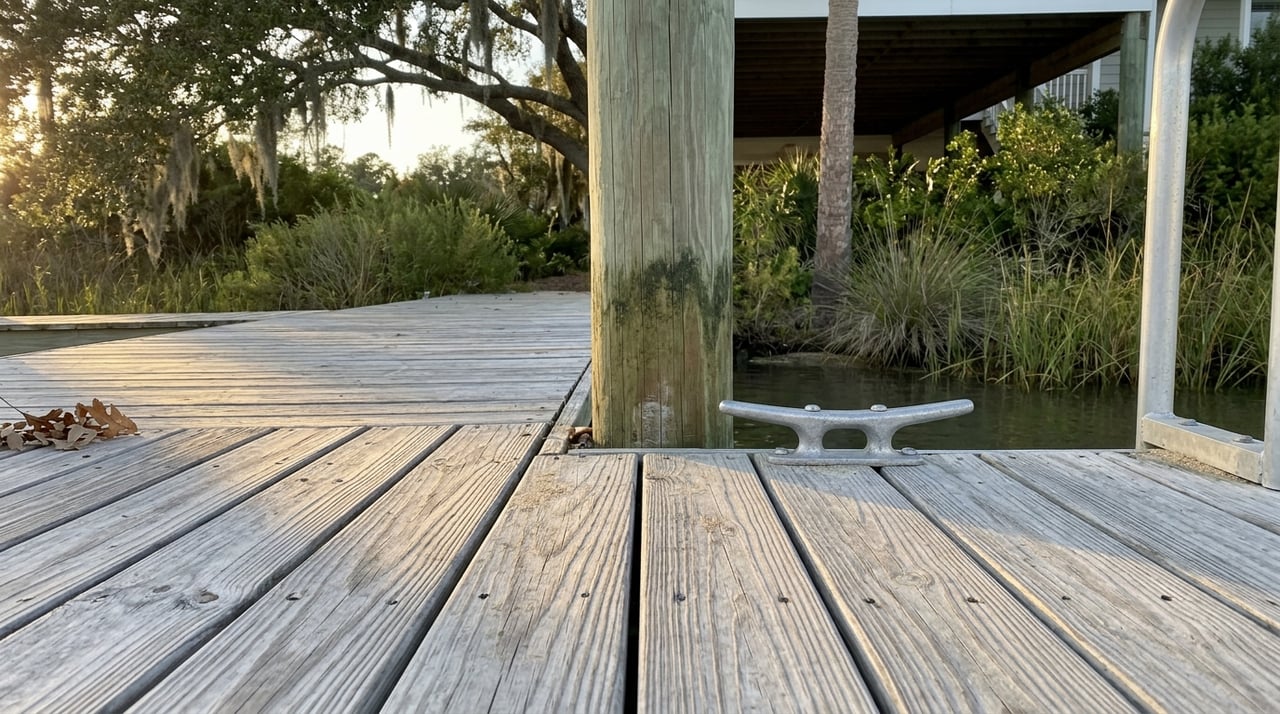
If the property includes a dock or other shoreline structure, it helps to think of it as a regulated asset. According to South Carolina’s coastal permitting guidance, basic maintenance and repair may not require a new permit if the structure remains generally intact and work stays within the original dimensions.
However, expansion, additions, or major rebuilding do require department approval or written authorization. The state also advises owners to consult local government before starting construction and to make sure the builder follows all applicable requirements.
In practical terms, that means dock work is not a casual weekend project. If storm damage happens, you will want to know whether the dock is still structurally sound, whether pilings or hardware have loosened, and whether your planned repair is actually considered reconstruction.
Questions to ask about a Beaufort dock
- Is the dock still generally intact?
- Are hardware, pilings, or decking loose or damaged?
- Would the planned work stay within original dimensions?
- Does the scope of work trigger approval or written authorization?
- Has local government been consulted before construction begins?
Verify Insurance Before You Need It
Insurance is one of the most important parts of buying a waterfront home, and it is worth sorting out early. The South Carolina Department of Insurance explains that standard homeowners insurance may cover storms, fire, theft, and other covered perils in the policy, but flood damage is generally not covered under a standard homeowners policy.
Flooding from overflowing waterways, street flooding, or storm surge is typically covered through a separate flood policy, as described by the South Carolina Department of Insurance. FEMA also notes that National Flood Insurance Program coverage usually has a 30-day waiting period unless an exception applies.
For buyers, the key takeaway is simple: do not assume your homeowners policy handles flood loss. Waterfront ownership usually requires a clear review of both standard homeowners coverage and separate flood options before closing.
Insurance items to compare
- What perils are covered under the homeowners policy
- Whether flood coverage is separate
- Waiting periods for flood coverage
- Premiums and deductibles
- Carrier quality and customer service
The state also offers an Insurance Locator that can help consumers connect with licensed property-insurance agents and companies. That can be useful if you are comparing coverage options for a waterfront purchase.
Prepare for Storm Season Before It Starts
Storm planning works best when you do it before watches and warnings are issued. The South Carolina Department of Insurance storm readiness page encourages residents to know their evacuation zone and review hurricane preparedness information, while the City of Beaufort says it issues emergency notifications during hurricane watches or warnings.
A good plan does not need to be complicated. It just needs to be clear, realistic, and ready before a storm is on the horizon.
A practical storm plan for waterfront owners
- Know your evacuation zone
- Keep important documents secure and easy to access
- Decide where you will get official weather updates
- Have a plan for loose exterior items before storms arrive
- Review re-entry safety steps before returning after a storm
The City of Beaufort directs residents to official county and weather sources for updates, which is another reminder that local preparedness should be part of your routine, not just your emergency response.
Document Damage the Right Way
If storm damage happens, documentation matters. FEMA recommends photographing both the exterior and interior, recording appliance make, model, and serial numbers, and saving repair receipts during the recovery process.
For waterfront homes, this can be especially important because wind, rain, and water damage may overlap. Clear records can help you support your claim and organize repairs with less confusion later.
FEMA also says you do not need to wait for an inspection before beginning cleanup and repairs once it is safe to do so. If you return after a storm, FEMA advises checking for structural damage before re-entering the property.
After-storm first steps
- Check for structural damage before re-entering
- Photograph exterior and interior damage
- Record appliance details if affected
- Save receipts for cleanup and repairs
- Keep organized notes for insurance discussions
Look Into Mitigation Options
Owning a waterfront home also means thinking about ways to reduce future risk. The South Carolina Department of Insurance says the SC Safe Home program offers grants for roof retrofits and hurricane shutters or protective barriers.
The department also notes that some mitigation certifications may help homeowners qualify for insurance discounts, depending on the carrier. While discounts vary, the bigger point is that resilience upgrades may improve both protection and long-term planning.
If you are buying a Beaufort waterfront property, this is worth discussing as part of your ownership budget. It can help you think beyond the purchase and toward the full cost of maintaining a coastal home responsibly.
What Buyers Should Ask Before Closing
A waterfront showing can be memorable, but your decision should come down to more than the view. Before closing, it helps to understand how the home has been maintained, what systems may need closer monitoring, and whether any dock or shoreline structures could involve future permitting questions.
You will also want clarity on insurance, flood coverage timing, and storm-readiness basics. These are not side issues in Beaufort. They are part of what it means to own well on the water.
Working with a local team that understands Beaufort’s waterfront realities can help you ask the right questions early. At Chambers Helms Group, we believe practical guidance is just as important as helping you find the right property, and we are here to help you navigate Beaufort waterfront ownership with confidence.
FAQs
What makes Beaufort waterfront homes different to maintain?
- Beaufort waterfront homes face ongoing coastal exposure like wind-driven rain, salt air, corrosion, and moisture-related wear, which means exterior systems usually need more regular attention.
What should buyers know about flood insurance for Beaufort waterfront homes?
- Standard homeowners insurance generally does not cover flood damage, so you should review separate flood insurance options early and keep FEMA’s typical 30-day waiting period in mind.
What should owners know about Beaufort dock repairs and permits?
- Basic dock maintenance may not require a new permit if work stays within the original dimensions and the structure is generally intact, but expansions or major rebuilding usually require approval or written authorization.
What storm planning steps matter for Beaufort waterfront homeowners?
- You should know your evacuation zone, secure important documents, follow official update sources, plan for loose exterior items, and understand safe re-entry steps after a storm.
What should Beaufort waterfront owners do first after storm damage?
- Start by checking for structural damage before re-entering, then photograph damage, record affected appliance details, save receipts, and keep organized documentation for insurance purposes.