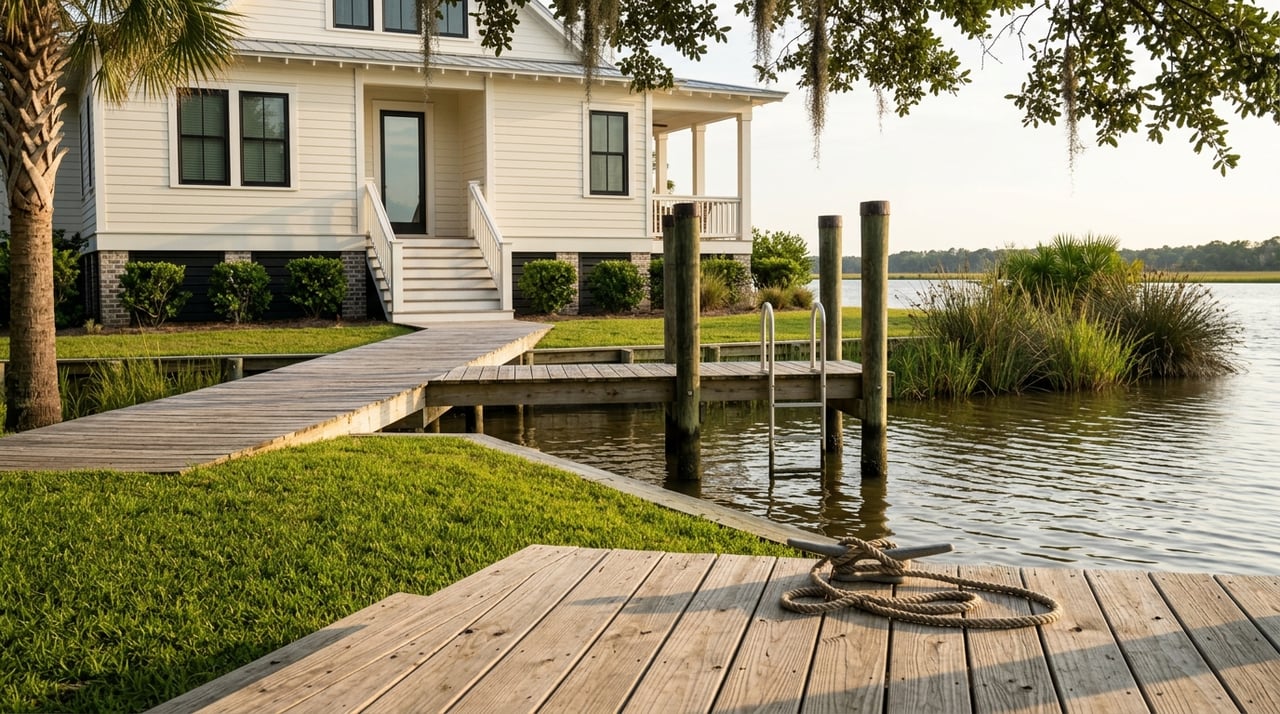
Buying a waterfront home in Beaufort can feel like a dream until you realize how many extra questions come with life on the water. You are not just buying square footage and a view. You are also evaluating flood risk, insurance timing, dock access, permit history, and how you plan to use the property day to day. With the right process, though, you can move forward with more confidence and fewer surprises. Let’s dive in.
Start With Budget and Preapproval
Before you tour marsh-front cottages, deepwater homes, or riverfront estates, get clear on what you can comfortably afford. In Beaufort, your monthly cost may include more than your mortgage payment, especially if flood insurance or waterfront-related maintenance becomes part of the picture.
A preapproval is an important first step because sellers often expect to see one when you submit an offer. It is also worth remembering that a preapproval is tentative and typically expires in 30 to 60 days, so your timeline matters.
As you build your budget, think beyond the purchase price. You should compare down payment needs, closing costs, insurance availability, and disaster risk before deciding how far to stretch.
Choose a Beaufort Waterfront Guide
Not every home search in Beaufort is the same. Waterfront properties come with questions about flood zones, shoreline regulations, access rights, and permitting that can affect both value and everyday use.
That is why it helps to work with an agent who knows your preferred price point, property type, and local areas well. For a waterfront purchase, local experience matters because small details can change how a property functions and what it may cost you over time.
At Chambers Helms Group, that local perspective is part of the process. As a boutique team rooted in Beaufort, we help you look past the view and focus on the details that shape long-term ownership.
Tour Homes With Waterfront Questions in Mind
It is easy to fall in love with a porch view or private stretch of shoreline. Before you get too attached, take time to research the property’s disaster risk and whether insurance is available and affordable.
This is especially important in Beaufort, where the City says flooding can happen at any time of year. Storm surge, tropical systems, high tides, and heavy rain can all contribute to flooding conditions.
As you tour homes, ask practical questions early. If a property has a dock, shoreline structure, or direct water access, you will want to understand what is permitted, what is documented, and what responsibilities may come with it.
Make an Offer With Strong Protections
Once you find the right property, your offer should protect you as much as possible. A waterfront home may need more due diligence than a standard purchase, so your contract terms matter.
It is a good idea to include contingencies for financing and a satisfactory inspection. Those protections can give you room to investigate the property more thoroughly before you are fully committed.
You should also ask whether the home has experienced prior flood or storm damage. Past damage may affect insurance costs, future repairs, and your comfort level with the purchase.
Schedule Inspections Early
After your offer is accepted, move quickly on inspections. An early inspection gives you time to review findings, request additional evaluations if needed, and decide whether repairs or renegotiation make sense.
This step matters for any home, but it can be especially valuable for waterfront properties where moisture, prior storm impacts, or repair quality may not be obvious at first glance. If the home needs work, an inspection contingency may allow you to negotiate repairs or cancel without penalty, depending on your contract terms.
You should also remember that your lender will likely require an appraisal. If major issues are identified, the lender may require repairs before closing or may set aside funds for repairs after closing.
Verify Flood Zone and Flood Documents
One of the first Beaufort-specific questions to answer is simple: what flood zone is the property in? That answer can influence insurance requirements, development rules, and your total cost of ownership.
The City of Beaufort offers flood zone request forms, flood certificates, and elevation certificates, and its Building Codes Office can help determine the flood zone. Beaufort County also maintains digital flood maps for unincorporated areas.
Because Beaufort has both city and county flood resources, you should confirm whether the property is inside the City of Beaufort or in unincorporated Beaufort County before requesting documents or asking permit questions. That small step can save time and help you get the right information from the right office.
Understand Flood Insurance Before Closing
Flood insurance should be treated as a core part of your waterfront budget, not an afterthought. The City of Beaufort notes that flooding is not covered by standard homeowners insurance.
NFIP flood coverage can protect the building, contents, or both. Rates depend on where the property is built, how it is built, and the replacement cost.
Timing matters too. Flood coverage normally begins 30 days after purchase, though there is no waiting period when the policy is purchased in connection with making, increasing, extending, or renewing a mortgage. That is why you should ask your lender and insurance provider about flood coverage early in the process.
Review Elevation and Floodplain Rules
If you are thinking ahead to renovations, improvements, or rebuilding potential, floodplain rules deserve close attention. In Beaufort, development in the 100-year floodplain requires a building permit.
The City also notes that substantial damage or substantial improvements can trigger new-construction flood requirements. In plain terms, that means a home that seems workable today could face different standards if you make major changes later.
This does not mean you should avoid the property. It simply means those rules should be part of your decision before you make or finalize an offer.
Do Not Assume a Dock Is Guaranteed
Many buyers start a waterfront search with one big assumption: if the lot touches water, a dock should be possible. In Beaufort, that is not something you should assume.
South Carolina critical areas include coastal waters, tidelands, beaches, and beach or dune systems. According to SCDES, structures such as docks, bulkheads, footpaths, boatlifts, floating docks, and pier heads require permits.
If a property already has a dock or shoreline feature, ask about the permit history. If it does not, ask what approvals would be needed before assuming future use is possible.
Check Dock Plans and Other Approvals
In some waterfront communities, a subdivision may have a dock master plan. SCDES says that an approved dock master plan may outline which lots are eligible for private docks, but it is only a guide and does not guarantee a permit.
You may also need approvals from other parties, including local governments, HOAs, architectural review boards, or the Army Corps of Engineers. New dock applications are handled through SCDES ePermitting.
If the property relies on a shared dock, make sure you understand the legal access rights and maintenance responsibilities before closing. Shared access can work well, but only when the details are clear.
Ask the Right Questions Before You Commit
By the time you are serious about a waterfront home, your checklist should go beyond bedrooms and finishes. The goal is to understand how the property works, what it may cost to own, and whether it fits the way you want to live.
A few questions can help guide your due diligence:
- What flood zone is the property in?
- Is it in a Special Flood Hazard Area?
- Will flood insurance be required by the lender?
- Are flood certificates or elevation certificates available?
- Has the home flooded or been repaired after a storm?
- Is there permit history for the dock or shoreline structures?
- Is there a dock master plan that affects this lot?
- Are there shared access or maintenance agreements to review?
These questions may not be as exciting as the view from the back porch, but they are often what separate a smooth purchase from an expensive surprise.
A Smart Beaufort Waterfront Purchase
Buying a waterfront home in Beaufort is absolutely possible with the right plan. The key is to treat financing, inspections, flood research, insurance, and dock due diligence as essential steps from the very beginning.
When you take that approach, you can enjoy the beauty of Beaufort’s waterfront lifestyle while making a more informed decision about the property itself. That kind of clarity matters whether you are buying a full-time residence, second home, or long-term investment property.
If you are ready to explore waterfront homes with a team that knows Beaufort block by block and shoreline by shoreline, connect with Chambers Helms Group for thoughtful, locally rooted guidance.
FAQs
What should you budget for when buying a waterfront home in Beaufort?
- You should budget for more than the purchase price, including your down payment, closing costs, homeowners insurance, possible flood insurance, and other waterfront-related ownership costs.
What flood documents should you request for a Beaufort waterfront property?
- You should ask about flood zone information, flood certificates, and elevation certificates, and confirm whether the property is in the City of Beaufort or unincorporated Beaufort County before requesting local records.
What should you know about flood insurance for a Beaufort waterfront home?
- Standard homeowners insurance does not cover flooding, and flood coverage may normally begin 30 days after purchase unless it is purchased in connection with a mortgage transaction.
Can every waterfront lot in Beaufort have a private dock?
- No. SCDES says docks and related shoreline structures require permits, and even if a subdivision has a dock master plan, that does not guarantee a permit for a specific lot.
What should you ask about a Beaufort home’s storm or flood history?
- You should ask whether the property has flooded before, whether storm damage repairs were made, and whether those repairs are documented, because past damage may affect future risk and ownership costs.
Why is a home inspection important for a Beaufort waterfront purchase?
- An early independent inspection gives you time to review issues, request additional inspections if needed, and use your contract protections to negotiate repairs or reconsider the purchase.